
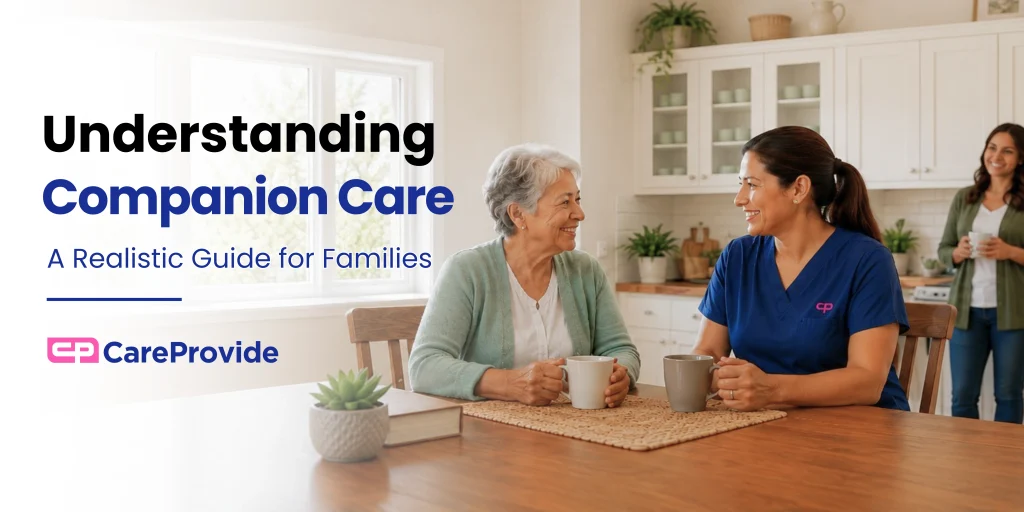
When families first begin exploring companion care, one of the most common assumptions is that companionship simply means having someone “sit with” an aging parent or loved one. In reality, quality companion care often becomes one of the most meaningful forms of support a senior can receive.
For older adults experiencing loneliness, cognitive decline, grief, or loss of independence, the right companion care provider can offer emotional stability, routine, social interaction, and reassurance, benefiting not only the senior but the entire family.
In my experience, many families begin the process with unrealistic expectations about what companion care should look like. Understanding what companion care actually involves can help create better relationships, smoother transitions, and more successful long-term care arrangements.
What Does Companion Care Actually Include?
Companion care is designed to support a senior’s emotional well-being, social connection, and daily routines. While it does not typically involve advanced medical care, its impact on quality of life can be significant.
A companion care provider helps create structure, familiarity, and meaningful interaction during a stage of life that can otherwise feel isolating.
In many cases, the most valuable support comes through simple daily interactions, including:
- Sharing meals together
- Encouraging conversation and social engagement
- Going for short walks or outings
- Assisting with routines and reminders
- Providing emotional reassurance and companionship
- Accompanying seniors to appointments or community activities
- Supporting hobbies and favorite pastimes
One thing I’ve noticed over the years is how much a senior’s mood, confidence, and willingness to engage can improve once trust and familiarity begin to develop. What may seem like small interactions can have a meaningful impact on a senior’s overall well-being.
How Is Companion Care Different From Personal Care?
One of the most common sources of confusion is understanding the difference between companion care and personal care.
Companion care focuses primarily on emotional support, social interaction, supervision, and assistance with everyday routines.
Personal care, on the other hand, involves more hands-on assistance with activities of daily living such as:
- Bathing and hygiene
- Dressing and grooming
- Mobility assistance
- Toileting support
- Transfers and physical assistance
I’ve worked with many families who initially started with companion care and later added personal care services as their loved one’s needs evolved. In some situations, a combination of services provides the most appropriate level of support.
Understanding this distinction helps families choose the right type of care and establish realistic expectations from the beginning.
Who Is Companion Care Best Suited For?
Companion care can benefit a wide range of seniors, but it is particularly valuable for individuals who:
- Live alone
- Experience loneliness or social isolation
- Have recently lost a spouse or close friend
- Are living with early-stage dementia
- Need reminders and routine support
- Have family members experiencing caregiver burnout
- No longer drive and need assistance getting out into the community
One situation I commonly see is families seeking companion care for reasons beyond physical assistance. They recognize the importance of emotional well-being, social connection, and regular engagement in a senior’s quality of life.
In many cases, families reach out because they notice subtle changes, such as a parent becoming less social, declining invitations, spending more time alone, or losing interest in activities they once enjoyed. Companion care can help address these concerns before they become larger challenges.
What Should Families Look for in a Companion Care Provider?
One of the biggest misconceptions about companion care is assuming qualifications alone determine whether someone will be a good fit. Families who are still deciding how to hire support may also benefit from understanding the differences between agency-based care and independent care arrangements.
In my experience, companion care is one of the most relationship-driven forms of home care. Experience certainly matters, but genuine connection often determines whether a care arrangement succeeds long term.
A companion care provider may have an impressive résumé and still struggle to connect with a client if communication styles or personalities do not align.
The strongest companion relationships are usually built on qualities such as:
- Patience and emotional intelligence
- Reliability and consistency
- Calm communication
- Adaptability to changing needs
- Respect for independence and dignity
- Strong listening skills
- Genuine interest in building relationships
Some seniors enjoy constant conversation and activities, while others prefer quieter routines and gentle reassurance. A great companion care provider knows how to adapt to the individual rather than approaching every client the same way.
This becomes especially important for seniors living with dementia, anxiety, grief, or significant life transitions, where emotional safety and consistency can be just as important as practical support.
Why Finding the Right Companion Care Provider Matters
One of the most overlooked aspects of companion care is personality compatibility.
Families often focus heavily on scheduling, experience, certifications, or immediate availability. While those factors are important, companionship works best when genuine comfort and trust develop between the senior and the care provider.
Before choosing a companion care provider, families should consider questions such as:
- Does the senior feel comfortable around this person?
- Is the communication style calming or overwhelming?
- Can the companion adapt to changing moods or memory challenges?
- Does the provider respect routines and personal preferences?
- Will this relationship feel sustainable over time?
I’ve often seen families surprised when a care provider who appears perfect on paper is not necessarily the strongest match in practice. I’ve seen situations where a senior immediately connected with a companion who shared similar interests or communication styles, while a more experienced provider struggled to build rapport.
A technically qualified provider who lacks emotional compatibility may struggle to establish trust, while a warm and adaptable companion often creates stronger long-term outcomes.
Common Misconceptions About Companion Care
Many families have expectations that unintentionally create frustration or disappointment. Understanding what companion care can and cannot provide helps set everyone up for success.
- Expecting Immediate Results: Trust and comfort rarely happen overnight. This is especially true for seniors who are resistant to receiving support, have experienced recent life changes, or are living with cognitive decline. Building meaningful relationships takes consistency and time.
- Expecting One Person to Handle Every Need: Families sometimes expect a companion care provider to simultaneously manage companionship, housekeeping, transportation, mobility assistance, meal preparation, emotional support, and advanced medical needs. While companion care providers often assist with a variety of daily activities, some situations require additional home care services or specialized support.
- Expecting Constant Entertainment: A successful visit does not always look busy or highly productive. One pattern I’ve noticed is that families often measure success by how active or busy a visit appears. In reality, some of the most meaningful visits involve listening to music, looking through family photographs, sharing stories, enjoying a cup of tea, or simply providing a calming presence during periods of anxiety.
- Expecting a Companion to Replace Family: Companion care providers can become important figures in a senior’s life, but they maintain professional boundaries. Their role is to improve quality of life, provide support, and foster meaningful engagement while maintaining professional boundaries. They are not a replacement for family relationships.
What Good Companion Care Looks Like in Real Life
Families supporting a loved one with early dementia often expect a companion care provider to keep the senior constantly engaged, reduce confusion, and restore previous routines.
In my experience, quieter activities often create the strongest sense of comfort, familiarity, and connection.
Successful companion care often includes:
- Listening to familiar music
- Looking through photo albums
- Folding laundry together
- Taking short walks
- Sharing tea and conversation
- Sitting calmly during periods of anxiety or confusion
Over time, families often realize that successful companionship is not about “fixing” a condition or keeping someone constantly occupied. Instead, it is about helping a senior feel safe, emotionally supported, connected, and less isolated.
That shift in perspective frequently changes how families evaluate the success of care.
The Biggest Mistakes Families Make When Arranging Companion Care
While every family situation is different, there are two mistakes that commonly create challenges.
Waiting Too Long to Introduce Support
Many families delay seeking help until caregiver burnout, hospitalization, or a significant crisis occurs.
By that point:
- Stress levels are already high
- Routines may be disrupted
- Seniors are often more resistant to change
- Family members are emotionally exhausted
I’ve found that seniors who are introduced to companion care before a crisis occurs often adjust more comfortably because the relationship develops gradually rather than during a period of stress.
Not Being Honest About Care Needs
Another common mistake is minimizing the care situation during intake conversations.
Open communication about routines, behaviors, mobility concerns, cognitive changes, and personality preferences helps create better matches and more successful care arrangements from the start.
The more accurately a family’s needs are understood, the easier it becomes to find the right companion care provider.
How Companion Care Benefits the Entire Family
Families are often surprised to discover that companion care supports much more than the senior receiving services.
Reliable companionship can help reduce:
- Caregiver burnout
- Emotional exhaustion
- Guilt and stress for adult children
- Family tension
- Anxiety about a loved one being alone
Knowing that a trusted care provider is visiting regularly creates peace of mind that extends throughout the household.
In many situations, the emotional relief experienced by family caregivers becomes just as valuable as the direct support provided to the senior.
How Long Does It Take for a Senior to Build Trust with a Care Provider?
One question families frequently ask is how long it takes for a senior to become comfortable with companion care.
The answer varies depending on personality, cognitive health, previous experiences, and how often visits occur.
I’ve seen some seniors build trust within a few visits, while others may need several weeks or even months before they fully embrace the relationship.
The key is consistency.
Regular schedules, familiar faces, and patience often help relationships develop naturally over time. Families who allow that process to unfold gradually tend to experience stronger and more sustainable outcomes.
How to Set Realistic Expectations for Companion Care
The most successful companion care relationships begin with clear communication and realistic expectations.
Families often experience better outcomes when they:
- Prioritize personality compatibility
- Allow trust to develop gradually
- Maintain consistent schedules
- Communicate routines and preferences clearly
- Understand that companionship is relationship-based
- Focus on emotional well-being rather than constant activity
Over the years, I’ve seen successful companion relationships develop through shared hobbies, daily routines, quiet conversation, and sometimes simply through the comfort of having a familiar face visit consistently.
There is no single formula, which is why finding the right match is often just as important as finding support itself.
When families ask, “What should I expect from a companion care provider?” the most realistic answer is this:
Companion care is not an instant solution to every caregiving challenge. Rather, it is a long-term investment in trust, emotional well-being, consistency, and quality of life.
For many seniors and families, those relationships become one of the most valuable parts of the entire care experience.
Considering Companion Care for a Loved One?
Choosing the right support can feel overwhelming. Our team can help you understand your options and find the right fit for your family.